Showing posts with label personal finance. Show all posts

Friday, September 25, 2020

Bittersweet Symphony

 
On the way home from work yesterday, The Verve’s “Bittersweet Symphony” blasted out over my car speakers. I forgot I had added it to my playlist.

In case you’re not familiar, the song has a very melancholy feel. It’s quite catchy, but the lyrics and vocal delivery are both melancholy…wistful…basically, it’s like it was written and sung by somebody who’s weary with the drudgery of everyday life.

The first line begins, “Cause it’s a bittersweet symphony, this life / Trying to make ends meet, you’re a slave to money then you die.”

Like I said, melancholy.

But relevant, given that this is a personal finance blog.

Sunday, August 2, 2020

How Rich are Americans, by Age Group?

How Rich are Americans, by Age Group?

In September 2017, the U.S. Federal Reserve issued a report based on the Survey of Consumer Finances. This survey was based on 6254 families, and the Federal Reserve report broke down the data by age group.

Note that this survey includes a house as part of a household's assets; page 14 of the report specifies "Declines in house prices in particular had a disproportionate effect on families in the middle of the net worth distribution, whose wealth portfolio is dominated by housing."

I've created a graph to illustrate this information, using LibreOffice Calc, a free and open alternative to Microsoft Excel. Here's the graph:

Wednesday, May 13, 2020

Are Roth IRAs a rip-off?

Roth IRAs vs. traditional IRAs—What's the advantage?

A while back, I had a brief debate with Financial Samurai in the comment section of one of his articles. His position was that Roth IRAs are a rip-off. I disagreed.

I like Financial Samurai, and he has a ton of great info on his website! But sometimes, two people see things differentlythe classic "reasonable people may disagree" argument. I believe that's what's happening here.


List, Demolition, Spiral Notebook, Rip, Torn, Tear

So I'll try to explain why I hold my position on the matter, using extensive quotes from the original page at https://www.financialsamurai.com/disadvantages-of-the-roth-ira-not-all-is-what-it-seems/#comment-343071

Sam: "So you think the government sucks, and you don't count on SS benefits, yet you are willing to pay more taxes up front? I don't understand the inconsistency."

Me: "There is no inconsistency."

Roth IRAs aren't a scheme to take your money. They simply give you the option to pay taxes now, or pay them later. Let me spell it out:

"You think the gov. is awful with money? [It is.] -> The gov. is going to have to pay the piper eventually. Since the gov. gets its money from taxes, that means that tax rates will be raised on everyone, across the board. I'm not talking 2019, or 2022, or 2025. I'm talking 2040 or 2050.

"If, like some people, you plan to 'work'—generate income—for as long as possible, you might well be in a higher income bracket AFTER "retirement" than you were at the beginning of your career."

-Financial Advice for Young Professionals illustrates the mathematical equivalence between a Roth IRA and a Traditional IRA, with the comment shown below:


Let’s say you’re in the 25% tax bracket. If you contribute 5,000 to a Roth IRA that is the same as contributing $6,666,67(not $5k) to a 401k. So after 10 years, both get a 5% return.
Roth: 5000*(1+.05)^10 = 8,144.47
401k: 6,666.67(1+.05)^10 = $10,859.30*(1-.25) = 8,144.47
The amounts are exactly the same after the 401k is taxed 25%. Now where I argue for a Roth is that how do you know what this 25% will go up or down. There are two factors that affect this: gov. tax rates and your future income. Both of which I guarantee you cannot predict with 100% certainty. And when you can’t predict something with certainty, I like to diversify. Which is what a Roth IRA does.
What if Sam has 3 kids and they each have 3 kids and now he has 9 grandchildren living in CA? Would he trade being away from his family for saving 10% on taxes? Hard to say :)
Me: "So, bottom line:

1) You pay the taxes now, and let that money grow. Once you're 59 and 1/2 years old, you can take the money out tax-free.

OR

2) You invest now, pre-tax, and pray that the gov. doesn't raise taxes on withdrawals 30 years in the future, or that your tax bracket in retirement is lower than your tax bracket is right now.

"Either way, you're still paying taxes on the investments in your IRA! Choosing option 1) amounts to a bet that you'll live to at least 60 years old, you won't need the money before then, and that the government will eventually have to raise taxes to bail it out of its own foolhardiness.

"Option 1) gives you certainty: you KNOW how much tax you'll pay. In 2060, I have no idea how much tax I'll pay on my forced distributions from a Traditional IRA, 401(k), etc! So Option 2) is less desirable from that standpoint.

If you pay 25% in taxes now, and you think you'll have to pay MORE than 25% in taxes in 2060, then choose a Roth IRA.

If you pay 25% in taxes now, and think you'll have to pay LESS than 25% in taxes in 2060, choose a traditional IRA."

So, to wrap things up:

Basically, whether you prefer a Roth IRA or a traditional IRA depends on what you expect the government to do regarding taxes in the future.

  • A traditional IRA means you expect your taxes to be lower in the future (either because your income will be reduced or because the government will lower your tax rate). Therefore, with this assumption, you'd rather pay later.
     
  • A Roth IRA means you expect your tax rate to be higher in the future, so you'd rather pay now.
So are Roth IRAs a rip-off? As Betteridge's Law suggests, the answer is "no." Whichever option you prefer depends on your situation. Choose wisely!


***
Support the Froogal Stoodent blog by checking out these laptops or these headphones;
anything you buy will generate a small commissionat no cost to you! Thanks!

Friday, August 4, 2017

Links for your financial health, August 2017

Links for your financial health, August 2017

There's no substitute for personal responsibility and fair laws (not to mention equitable enforcement of those laws). Their absence may lead to the downfall of the United States: http://howigrowmywealth.com/made-america-wealthy/
     -Don't think the U.S. is fiscally doomed? Illinois might already be.


Excellent advice for college students: http://www.themillenniaires.com/managing-the-colossal-costs-of-college/

Excellent financial advice for college students (and non-college-students, for that matter): https://kjhfinancialservices.wordpress.com/2017/07/18/starting-college-financial-tips/

Would less work make us more productive? https://crew.co/blog/why-you-shouldnt-work-set-hours/

Friday, July 21, 2017

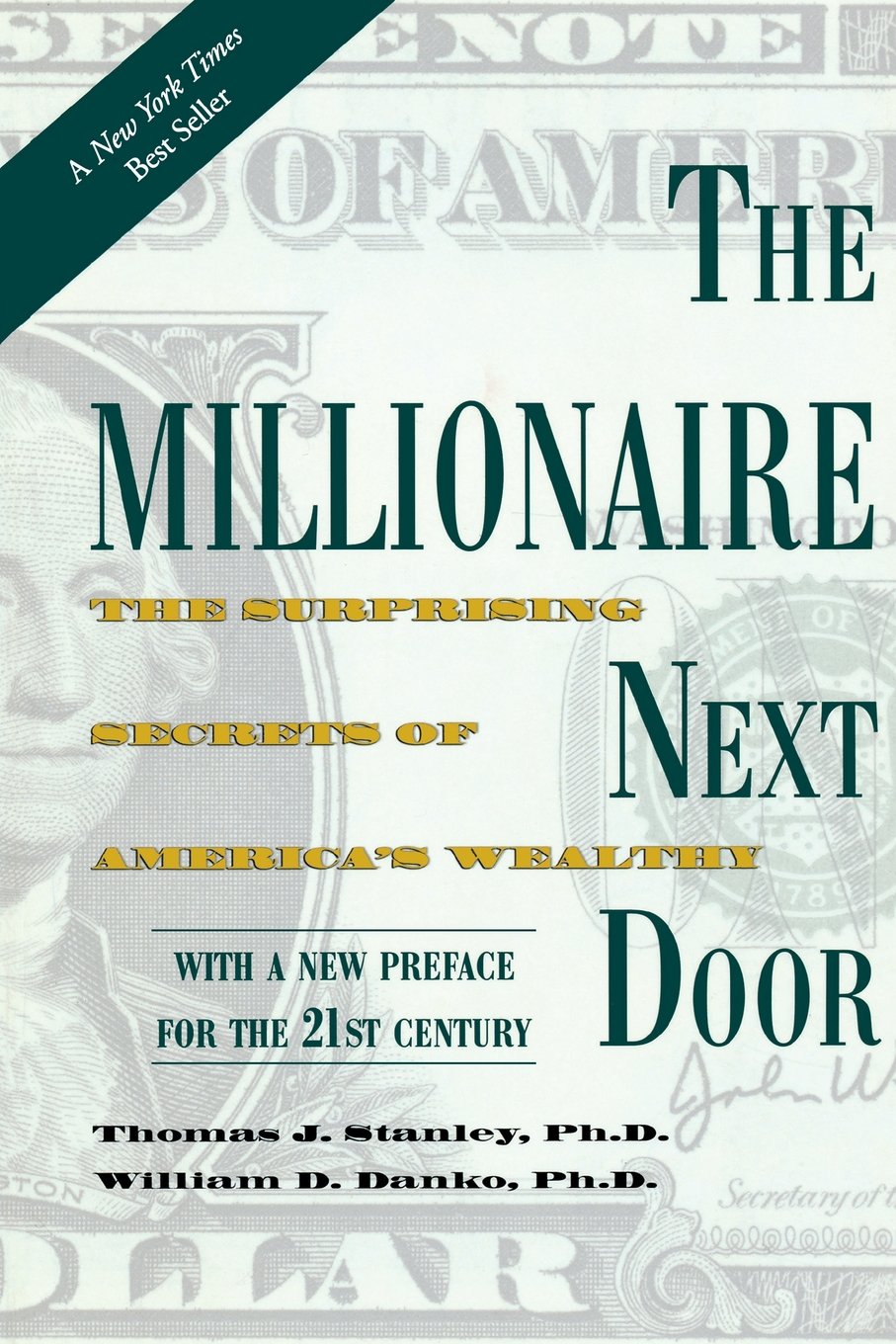
The 5 Best Money Books

The 5 Money Books You MUST Read!

There are self-help books (and podcasts and so forth) on every conceivable topic! So, as you might expect, there are plenty about money as well.

But how can you sift through the garbage to find the gems? Well, I can't claim to have read everything, but I can share the most helpful books that I've found. So, I've compiled a brief list of my favorites, including a couple that may surprise you!

Stanley and Danko

Tuesday, June 27, 2017

Money and the NFL

Pining for football during the extended no-football drought? Here are a couple links to topics related to both the NFL (to address your craving for NFL news) and money (because this is a personal finance blog...):

Monday, May 22, 2017

Equity crowdfunding: How YOU can help produce a Hollywood movie

Equity Crowdfunding: 
How You Can Invest in Hollywood Without Already Being a Millionaire

Have you ever wanted to be a part of Hollywood?

Have you ever wished you could share in the profits of a big movie?


Monday, March 13, 2017

Trick yourself out of debt!

Trick Yourself Out of Debt

As this tragic story demonstrates, debt can have life-shattering consequences. Seriously, follow that link and read the story. I’ll wait here.

Done? OK, welcome back! Pretty somber stuff, huh?...

For all the talk about money—how to save ithow to manage it, how to invest it, how to pay off your debt, which app is best to help you stick to a budget—there is very, very little talk about the emotional side of money. And that’s a topic that we obviously cannot continue to ignore!

You may have heard of the so-called ‘debt snowball’ method: pay off the debt with the lowest amount owed; once that’s paid off, put that extra money toward the next smallest debt, and so on.

Some people take issue with this, since it’s more productive to put your money toward the debt with the highest interest payment first—the so-called ‘debt avalanche’ method. Advocates of the debt avalanche often fail to understand why people would use the obviously inferior debt snowball method instead.


Wednesday, January 18, 2017

Links for your financial health, January 2017

Links for your financial health

Confused about the difference between Roth IRAs and regular IRAs or 401(k)s? Mr. Tako explains clearly and succinctly at http://www.mrtakoescapes.com/give-yourself-the-gift-of-wealth/:

"IRA / 401(s) — Don’t pay taxes now, pay later!
Roth IRA — Pay taxes now, but don’t pay taxes later!"
The above link at mrtakoescapes.com provides a great resource on wealth-building--a recommended read! Some other interesting and important thoughts for your financial health:

Saturday, June 25, 2016

Links June 2016

"I never wanted anything handed to me. I wanted to prove myself every year..." --NFL great Jerry Rice, discussing his intense workouts and his unflagging preparation, year after year, even after helping the San Francisco 49ers to 4 Super Bowl championships in 12 seasons!

Rice was never one of the most athletically gifted receivers to play the game. There have been plenty of talented receivers who were stronger, faster, and could jump higher--but nobody could outwork Jerry Rice. That is what made Jerry Rice the greatest receiver ever to play the game of football,

And it's that kind of work ethic and dedication to improvement that can make a mediocre talent into a great achiever in any field. I've written about grit before, and it bears repeating: grit, not talent, is the key to success!

Focus on building wealth slowly. That's what I (and many other personal finance bloggers!) have been saying for a long time :)

What does your college tuition get you that you can't easily get elsewhere?

What are dividends, and why do financial experts keep talking about them?

Don't settle for a job or a salary that's less than you want. Keep your mind open to other options!

Phroogal is doing their 10,000-mile Road to Financial Wellness again this year [at a more leisurely pace, this time!]. A road trip winding across the United States is always a big undertaking; kudos to them for doing it to raise awareness and get the conversation going about money!

Monday, April 13, 2015

The importance of financial literacy

A recent article published online by Forbes (http://www.forbes.com/sites/nealegodfrey/2015/04/12/why-dont-our-kids-have-the-money-smarts-to-live-in-the-real-world/) laments the lack of financial literacy in America today, reporting the alarming finding that 40% of Americans grade their own understanding of personal finance with a C, D, or F! Moreover, over half of American adults don't have an emergency fund big enough to cover 3 months worth of expenses.

The author joins in the recommendation that parents and schools combine to teach fiscal responsibility to our children--but first, adults need to understand it themselves!

Until everyone is financially savvy, we will all need to keep up the fight and advocate the Millionaire Mindset!

Happy saving!